
CrossFit workouts have been on fire for years as far as fitness trends are concerned. From gym exercise to national competitions, the upward curve of the popularity of CrossFit shows no sign of slowing down.
Setting off your fitness journey with CrossFit is a terrific option to get in shape. It’s built on high-intensity interval training that helps torch fats, boost strength, build muscle and improve cardiovascular health.
But to work out safely dodging internal injuries, you should always put on a heart rate monitor.
We have rounded up a comprehensive list to help you select the best heart rate monitor for CrossFit.
What is Heart Rate?
Your heart rate is the speed at which your heart beats per minute. Denoted by BPM (Beat per Minute), it’s actually the total contraction number of your heart muscle (myocardium) over a minute for pumping oxygenated blood to the entire body.
There are two phases to the myocardial cycle:
- Systole: The heart muscle shrinks and the valves of the two right chambers – the atrium and ventricle- open. The oxygen-rich blood gets into the lung through the veins following these two valves for purification.
- Diastole: Diastole is the time between two consecutive myocardial contractions when the right valves close and the left atrium and ventricle receive the purified oxygenated blood from the lung. This blood then gets circulated throughout the rest of the body through arteries.
The heartbeat rate may vary from person to person based on a couple of factors. But as a rule of thumb, for an adult (both man and woman), it’s 72 bpm.
Let’s have a quick glimpse of the factors that can influence your heart rate:
- Your age
- Current fitness level
- The rate at which your body takes in oxygen and discharges carbon dioxide
- Genetic condition
- Special physical needs
- Health issues such as cardiovascular or pulmonary disease, and more.
Types of Heart Rate
Resting Heart Rate (RHR)
Resting heart rate (RHR) is the number of times your heart pumps to transfer the minimum volume of oxygenated blood your body requires when you are relaxed.
According to the American Heart Association (AHA), the standard resting heart rate for anyone 15 years old and above can be between 60 and 100 bpm.
However, a heart rate below or above this standard rate is normal for some people. For instance, RHR for runners and triathletes can be as low as 40 bpm. Women experience 2-7 beats more than men over a minute.
But if you constantly experience a heart rate lower than 60 bpm (bradycardia) or higher than 100 bpm (tachycardia) followed by exhaustion or drowsiness, it may indicate underlying issues and require immediate medical help.
Factors that influence the resting heart rate in an individual are:
- Age
- Activity and fitness levels
- Smoking habit
- Air temperature
- Body size, obesity, etc.
- Cardiovascular soundness and issues like type 2 diabetes, high cholesterol, etc.
- Emotional state, long-term anxiety
- Medications, for instance, levothyroxine
Maximum Heart Rate (MHR)
Your maximum heart rate is the highest number of contractions in a minute that your heart muscle can maintain under maximum stress to pump the highest volume of oxygen-rich blood to the body.
If you’ve ever tried to figure out your RHR, you can find your MRH just doing the opposite to it. Instead of relaxing your heart muscle, you need to push it to the highest endpoint.
Though it’s tough to accurately measure your maximum heart rate, you can get an approximate reading by subtracting your age from 220.
So if you are 30 years of age now, your maximum heart rate would be 220-30 = 190.
Target Heart Rate (THR)
Your target heart rate is the minimum number of times your heart beats over a minute to hit your target level of exertion essential for optimal cardiovascular soundness. The target heart rate is a variant of several factors, and people may target to reach a distinct THR zone based on their fitness level, heart heart, age, gender, etc.
Generally, it can range between 50% and 70% of your MRH. For vigorous and high-intensity workouts, your THR can go as high as 75-85% of your HR Max.
Recovery Heart Rate (HRR)
Heart rate recovery (HRR) is the span between your target heart rate and the heart rate soon after a workout. It’s the evaluation of your heart health and its capacity to get back to the resting heart rate after you finish a bout of exercise.
Heart Rate Monitor
Heart rate monitors or HRMs are personal health tracking devices that constantly track your heartbeat and record it for future analysis to help evaluate how optimally your heart muscle can function.
You will find different heart rate monitors based on the operating principle.
Let’s look over how different types of heart rate monitors work:
Chest-strap Heart Rate Monitor
Chest straps work based on ECG technology and are the most accurate heart rate monitors. A chest-strap HRM consists of an electrode pad, a high-quality belt that sits around your chest, and a detachable snap-on transmitter. As you sweat while working out, the electrode pad in the HRM picks up the electric signal given off by your myocardium tissue and immediately sends it to the transmitter for further analysis. Inside the transmitter sits the microprocessor that analyses the signal and transfers your heart rate value to the company-specific app installed on your mobile via ANT+ or Bluetooth connectivity. The mobile works as the receiver and displays real-time heart rate data during your activity session.
Most high-end chest straps are compatible with an extensive array of fitness watches and third-party training or sports apps to help track your heart rate conveniently.
Pros of Chest-strap HRMs
- Highly accurate heart rate reading
- Very reliable to put on in a range of sports
Cons of Chest Strap HRMs
- Any mistake in placing the device right can lead to a false reading – make sure you wear it right below the nipple line for the most precise result.
- Straps need to be cleaned and washed regularly to ensure the best functionality.
- You have to carry the strap.
Optical HRMs
The most popular and widely used heart rate monitors are wrist-based ones, functioning based on a non-invasive and uncomplicated technology – photoplethysmography (PPG) that gleans your heart rate value by measuring the volumetric variation of your blood flow.
Optical heart rate monitors come in two forms – wrist-based and arm-based.
An OHRM includes a photodetector that houses the sensor and multiple LED lights as the main components. The device wraps around your wrist. The LED shines lights of different wavelengths (mainly green) onto your wrist skin, illuming the arteries. Due to the difference in wavelengths, these lights respond differently to the blood and tissues underneath your skin and return to the device as reflected/refracted signals.
The photodetector inside the watch picks up the signal and encodes it as ‘0’ and ‘1’ based on ‘high’ and ‘low’ signal peaks after a high-level software algorithm processes it. The analyzed pulse rate data gets fed to the company-specific mobile app that constantly pings you of your heart rate value while working out.
Pros of Optical HRMs
- Convenient to put on as daily wear and during the workout.
Cons of Optical HRMs
- Unfortunately, skin color and size play a critical role – the darker the skin, the harder it is for the OHRM to gleam lights through tissues to measure heart rate.
- Less accurate than chest-strap HRMs, especially in sports that require you to flex your wrist muscle or move your hands vigorously.
Ways Heart Rate Tracking Can Help CrossFit Athletes
It’s no secret that high-end wearable technologies and heart rate monitoring are the latest trends in the fitness sector, and gyms that make the most of these two can witness a substantial upsurge in their client retention number.
By offering instant feedback and insights into an athlete’s essential body stats at the gym or even on the go, group heart rate tracking helps gyms market and retain their HIIT-based training packages.
Let’s look through how heart rate monitoring helps CrossFit athletes optimize their fitness and keep their ticker in check with ease:
A source of Comprehensive Feedback
As a CrossFit athlete, you are not always in weightlifting or interval training. Sometimes, you may get involved in swimming or running to build endurance. It’s where a triathlon HRM enters the scene.
A high-end heart rate monitor is a versatile device that keeps track of and stores a range of health metrics besides your heart rate – VO2 max, distance covered, calorie burned, aperiodic heart rhythms, etc.
By helping you accurately follow up on your heart rate along with your reps, sets, and time, HRMs offer you a complete and real-time snapshot of what you have achieved during a WOD. Thus you can measure your workout efficiency and evaluate if you are on the right track.
It Provides Recovery Information
As we all know, heart rate monitors don’t only keep an eye on your heart muscle functionality. It is like your pacer that can help you follow up on respiratory functions, cardiovascular operations, and the oxygen saturation level in the blood.
Modern high-built heart rate monitors also measure your recovery time and tell you how much time your heart muscle takes to get back to your resting heart rate after a big bout of exercise. In other words, it gives a comprehensive view of your heart health – the faster the heart backs to resting HR, the healthier it is.
Just as other health metrics that CrossFit athletes keep track of, this recovery HR data can help boost physical fitness.
Push Yourself to Work Harder
One of the best benefits of putting on a heart rate monitor is that it helps athletes get the fire back in their workout routine.
When you find a notification on your daily calorie burned, water or food intake, etc., popping up on your mobile screen, you probably get motivated to work a little harder and be on the right track.
Plus, by notifying you of your heart rate data during an activity session, an HRM helps you understand if you’re overexerting your body or if there is still room for increasing the exercise intensity. So you can hit your target heart rate zone safely, dodging underlying injuries.
Features to Look for in a Heart Rate Monitors
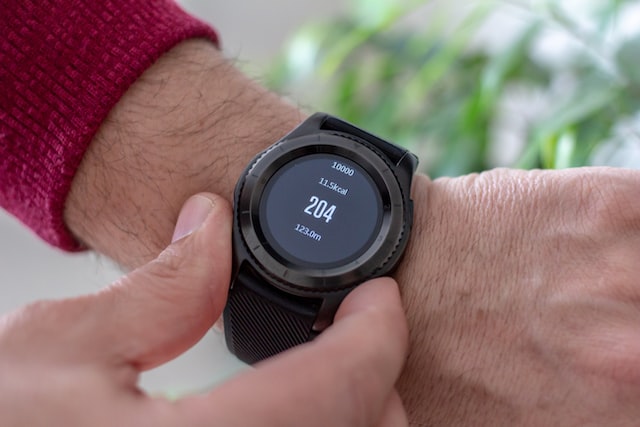
Let’s look through the features that make a quality HRM package:
Recovery Heart Rate Monitoring
As we have already said, your HRR is an excellent indicator of how sound your cardiovascular, more specifically, heart health is. If you are in HIIT or sprint, you must cash in on a quality device that shows your real-time recovery heart rate.
Target Heart Rate Zone Functionality
Investing in an HRM having no target heart rate zone setting functionality is a big fat no. Today, most advanced HRMs have upwards of half a dozen THR zones to help users set one or more THR zones and safely work out at their required exercise intensity. Thus, they can preset the device for various exercises – from endurance to anaerobic, aerobic, and beyond.
Speed and Distance Tracking
It’s another essential feature of a quality HRM you cannot overlook. Make sure you buy a device with built-in GPS and navigation functionality that can constantly ping your location, thus tracking your covered distance while running. Some high-end HRMs also feature a built-in accelerometer that can gauge the length of strides in real-time.
Added Features
Many top-tier HRMs support functionalities like stopwatches, alarms, digital calendars, and so on that together, make your device more than a mere digital watch. Buying an HRM that is swim-proof and water-resistant is an advantage.
Battery
If you are up for buying a wrist-/arm-based heart rate monitor, check if it comes with long battery life – probably a couple of years. Most top-tier HRMs now feature a rechargeable battery. In this case, don’t forget to check the run time with GPS and HR mode turned on before you get it recharged. If you love spending days trekking or in the saddle, nothing is more frustrating than running out of juice and being unable to track your body stats.
Calorie Counter
If you set off on a journey to shedding weight, check if your HRM can effectively track the calorie you have burned during each exercise session.
Digital Interface
Buying a high-end HRM that can connect to and sync data with your smartphone or computer rather than a standalone device is a plus. So you can enable effortless data sharing and transmit your workout data and body stats tracked with your HRM to your smartphone for further analysis or data storage. Most HRMs feature ANT+ and Bluetooth connectivity to enable seamless device integration.
Code Transmitter
High-end HRMs with an embedded code transmitter tend to display more accurate results by blocking signals from other wireless devices nearby. Check the heart rate monitors you have shortlisted for code transmission functionality for more precision health metrics tracking.
Best Heart rate Monitor for CrossFit
Here’s the run-down of the best heart rate monitors for CrossFit:
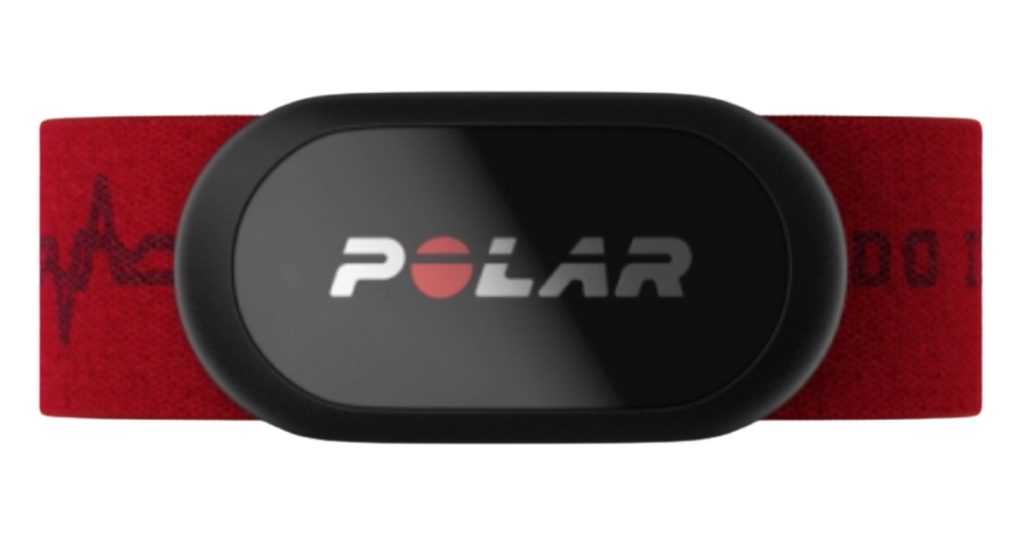
Polar H10
Technical specifications:
Net Weight: 60 g
Water Rating: 3 ATM
Code Transmission: 5k transmission
Battery: 160 mAh Li-ion battery; 400 hours
Brief Overview
Widely considered the gold standard in heart rate monitoring sensors, Polar H10 is the best of breeds in the HRM market.
Loaded with marquee features and tons of activity-tracking functionalities, this flagship product by Polar ensures unrivaled precision when it comes down to tracking your heart rate.
No matter what training app you use, supporting ANT+ and Bluetooth connectivity, H10 can connect to a host of third-party training tools and HRM-compatible Cardio equipment apps – Nike, Strava, and the list goes on. Plus, your device will ping you for software updates.
Even better, the anti-slip silicon dots, interference-restraint firm buckle, and high-built textile strap help you follow up on your body stats, snugly sitting around your chest.
Key Features
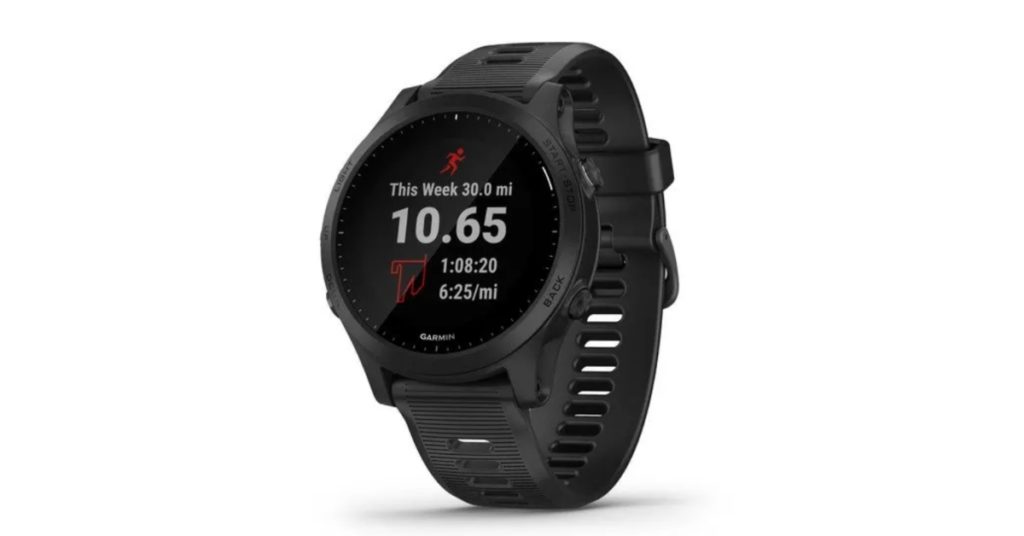
Garmin Forerunner 945
Technical Specifications
Net Weight: 50 g
Water Rating: 5 ATM
Internal Memory: 200 hours of activity data
Battery Life: Up to 2 weeks in smartwatch mode
Brief Overview
Blending high-end innovative technology with an ultra-light design, Garmin 945 is the ultimate kick-off for most top-tier wrist-based heart rate monitors with hefty price tags. Specially designed for the driven, this high-built device ensures you have got the right tool in action while chasing down your insane fitness goals!
No matter if you like long days out in the saddle, with Garmin Forerunner 945‘s ultra-long battery life that lasts up to 10 hours with GPS and music mode turned on, your device will never run out of juice.
Moreover, the full-color onboard maps and high-end navigation functionality will guide you on your outdoor activities – now, you can efficiently track in more challenging territories than GPS alone.
Though the design may seem a little bland, Garmin 945 is a feature-loaded and highly accurate OHRM device that can offer you the best bang for the buck.
Key Features
POWR LABS™ Heart Rate Monitor Chest Strap
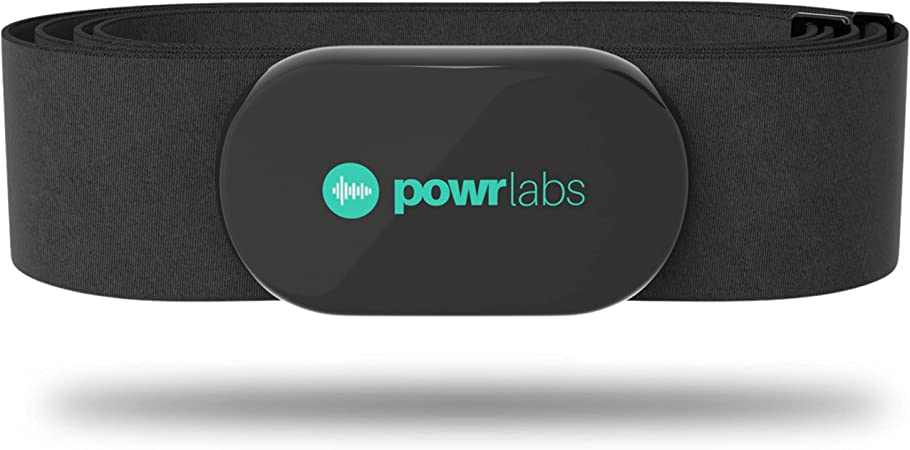
Technical Specifications
Net Weight: 55 g
Connectivity: ANT+ and Bluetooth 4.0 dual-band
Water Rating: IPX67 water & sweat-proof design
Battery: CR2032 battery cell
Transmission Range: 65 ft
Brief Overview
If you are a pro CrossFitter and need a high-end HRM without breaking the bank, Powr Labs Heart Rate Monitor Chest Strap can be your ultimate pick. With a high-built and comfortable strap and optimal heart rate tracking, this chest-strap HRM is constantly pumping out competitors with bells and whistles.
Whether you hit trails, trampoline in the backyard, or cycle in the rain, this ultra-durable device is battle-tested to offer you the best possible accuracy in tracking your essential health metrics, even in the most challenging environments.
Though POWR LABS™ Heart Rate Monitor is not the best option to put on while swimming, it’s easy to use, comes with an intuitive user interface, and connects with a host of training apps and equipment.
Key Features
Wahoo TickR X
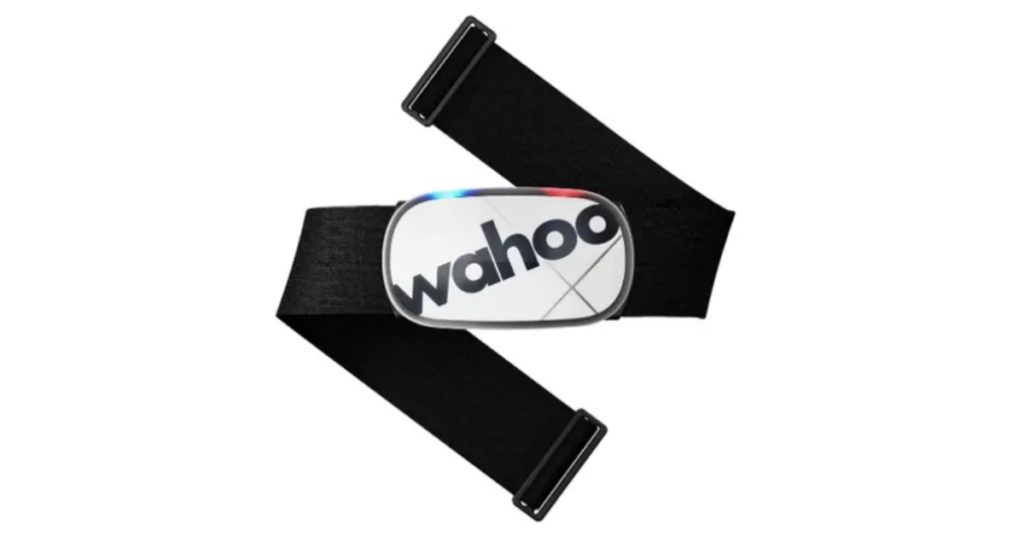
Technical Specifications
Weight: 1.7 oz
Battery: Li-ion Coin Cell
Water Rating: IPX7 (Waterproof up to 5 ft.)
Brief Overview
Fusing best-in-class health tracking functionalities in a slimline layout, Wahoo Tickr X is one of the best HRMs in its price bracket. It can help you keep your ticker up and switch up your workout routine effortlessly while offering the best bang for the buck.
Equipped with state-of-the-art ANT+ and Bluetooth connectivity, this high-end HRM seamlessly connects with a range of gym equipment, GPS watches, bike computers, and third-party apps. Even better, it allows you to connect to up to three devices simultaneously via Bluetooth.
Designed to help you get the most out of your activity sessions, the TICKR X keeps an expert eye on calories burned, heart rate, and indoor cycling cadence. No more losing your activity data – with Tickr X, your every effort counts!
Though it cannot track HR underwater, it’s a value-packed HRM with a smaller form factor and stylish design that makes it worth your hard-earned money.
Key Features
Garmin Vívosmart® HR Crossfit Activity Tracker

Get your heart rate data tracked in real-time with no/minimal friction with the latest Elevate™ wrist heart rate technology coming with Garmin Vivosmart®. No more juggling between sensors and additional straps to monitor your health metrics while doing CrossFit – with vívosmart® HR’s non-stop HR monitoring, you can make your health less prone to burn out and shed weight effortlessly.
Even though the apps may seem cumbersome, it’s ultra-lightweight and sleek and helps you gauge how efficiently your workout efforts are turning into expected results.
Key Features
Best Heart Rate Monitor for Crossfit: Final Thoughts
And that concludes our list! It’s difficult to name one heart rate monitor as the outright ‘best’ on the market, as they all have their individual strengths and weaknesses. Using this guide, we hope that you now have all the information you need to find the best heart rate monitor for crossfit that meets your specific needs.

Christian Scott is the founder and director of MindBodyFit, a website dedicated to providing the latest information on fitness, health, and mental well-being technology. With over six years of experience in the health and fitness industry, Christian is a passionate fitness enthusiast who combines his love for technology and wellness to help others achieve their best selves.