
Who wins in the battle between Myzone vs Garmin?
Health technology is at the point where everyone can monitor their body to find out how effective their workout was. Myzone and Garmin products represent two of these methods.
But, how do you know which one is right for you?
Let’s find out.
What Is Myzone?
Myzone is a fitness tracker and a social platform. This tool gamifies working out and rewards effort instead of grand results. The wearable can be worn on the wrist, arm, or chest to monitor your heart rate during a workout.
What is Garmin?
Garmin provides a range of smartwatches, heart rate monitors (HRM), and fitness-tracking straps as well as an app. The wearables can provide 24-hour activity tracking, monitoring your sleep quality, the number of steps walked, calories burned, and all-day heart rate, among other things.
What Is the Difference Between Myzone and Garmin Wrist Trackers?
As we mentioned before, Garmin tracks a full range of activities during the day to calculate how many calories you burned and how healthy your lifestyle is. Here’s a list of activities it tracks:
- Step counter
- Sleep monitoring
- All-day heart rate data in Garmin Connect
- Calories burned
- Floors climbed
- Distance travelled
- Intensity minutes
- Move IQ
- Move alert
- Pulse Ox
- Goal alerts
In contrast, Myzone focuses on the heart rate only. According to the company, the number of steps you walk in a day does not accurately reflect a workout. For example, if you were to do pushups, a wrist activity tracker would not register much activity. However, you have exercised, even if there were no steps.
Another example provided by Myzone is if you were to do ten squat jumps. The step tracker would count those as ten steps, but that high-intensity exercise burns more calories than simply walking ten steps. Again, it is not an accurate measure of your workout.
What does measure your workout more accurately? Your heart rate!
Why Should You Track Heart Rate?
Whilst walking does burn calories, a leisurely walk is not the same as a brisk walk or a run.
In fact, most fitness trackers are not very good at measuring how many calories you burned because that depends on a lot of different variables, including your base metabolic rate. It’s not just how many steps you walked.
What makes the difference to the calories burned is the intensity of your training. Walking is a lower-intensity exercise than running. How do you know? Because when you run, your heart rate goes up more than during a gentle walk, which means your body is working harder. Therefore, it is burning more fuel.
The reason for that is that higher-impact workouts require more effort. When your body needs to make more effort, your heart rate increases to allow your muscles to get more oxygen. And, once you reach your fat-burning heart rate, you start burning stored fat instead of sugar.
What Is Your Fat-Burning Heart Rate?
Fat-burning heart rate is the range in which your body burns stored fat rather than burning Glycogen.
Depending on the effort required in an activity, your heart rate can range between the resting heart rate and the maximum heart rate.
Now, what do resting heart rate and maximum heart rate mean?
What Does Resting Heart Rate Mean?
The resting heart rate, as the name suggests, is the rate at which your heart beats when you are relaxed and resting. Both factors are important because anxiety can affect your heart rate, as can activity.
When resting, your heart rate should be between 60 to 100 beats per minute.
What Does Maximum Heart Rate Mean?
On the other hand, maximum heart rate is the highest rate your cardiovascular system can sustain. When you hit that point, you need to stop and wait for your body to recover as your system cannot keep it up for any extended period of time.
To calculate your maximum heart rate, subtract your age from 220. For example, if you’re 20 years old, your maximum heart rate is 200 beats per minute, whereas if you’re 40 years of age, your max rate is 180.
Calculating Your Fat-Burning Heart Rate
Your maximum heart rate, of course, is the highest it can ever go without affecting your body adversely. For a workout, you should not be going over 70% of your maximum heart rate, unless you’re training for endurance and cardiovascular strength. In that case, you may want it to get up to 70%-85%.
So, using the two age examples, if you’re 20 years old, your maximum heart rate is 200 beats per minute, which means you need to be between 100 beats (50% of your maximum heart rate) and 140 beats (70% of your max heart rate) per minute to burn fat.
On the other hand, if you’re 40 years old, you need to achieve between 90 and 126 beats per minute.
How Do Wearables Measure Heart Rate?
Wearables generally use one of two technologies to measure heart rate—Photoplethysmography (PPG) or measuring the electrical activity of the heart.
The former is also referred to as optical heart rate monitoring and is used by wrist trackers. The latter is commonly used by chest straps and is the same technology used by electrocardiograms (ECG).
Optical Heart Rate Monitoring
Optical heart rate monitoring (OHRM) or PPG uses pulses of light flashed into the body. Then, the device measures how much of the light is scattered by the blood and how much of it is reflected back.
The theory behind it is that light entering the body will be scattered based on the changes in pulse rate and blood volume.
When your heart “pushes” out blood, the volume will go up, and drop between pulses. The higher volume of blood will absorb pulses of green light differently that the low volume.
By calculating the number of highs and lows in a minute, an OHRM system will be able to tell your pulse rate.
Electrocardiography
Electrocardiograms measure your heart rate by recording the electrical activity of your heart. These straps are attached to your chest, with the electrodes in contact with your skin. Once you start working out, the pads housing the electrodes get damp with your sweat.
Then, they start picking up the electrical signals from your heart. Every time your heart pumps, there is a spike in electrical activity. This spike is picked up by the electrodes and the information is sent to a transmitter.
The transmitter contains the microprocessor that records and analyses the information received. It also houses the bluetooth or communication technology that sends this information to dashboard on your app.
Optical Sensors vs ECG: Which Are Better?
Whilst both optical sensors and chest straps are great at measuring your heart rate during a workout, they come with their own sets of challenges. Here are some of the challenges faced by optical sensors or wrist trackers.
Optical Sensors: Challenges
Optical Noise
Since optical sensors use pulses of light to calculate your heart rate, they can get an inaccurate reading because of muscles, tendons, and bones getting in the way. The reading might also be affected by how tightly the tracker is attached. Even a little loose, and the sensor will move during workouts, leading to wrong measurements.
And, if it’s too tight, it could affect the density of the tissue under it, which, again, could affect the readings.
Skin Tone
Human beings have different skin tones. And, depending on how much time you spend in the sun, your skin tone could vary over time. The problem is, darker colours absorb more light.
So, when you use a technology that measures light reflection through skin, you cannot get consistent and accurate results across a spectrum of skin colours. You may not even get consistent results for yourself, depending on how tanned you are at the time.
Crossover Problem
If your workout is an activity that has a steady, repetitive motion—such as jogging or running—you may experience the crossover problem. This is a problem with wrist trackers as they measure both heart rate and step count.
During such activities, the heart rate tends to match with the number of steps you’re taking. If your heart rate goes over your step rate, the tracker can get “confused” and log the step count as the heart rate, even if the heart rate is much higher.
Location of the Sensor
Most optical sensors tend to be wrist trackers, which is not the ideal place for such instruments. There aren’t enough blood vessels in the wrist and too many tendons. A better place might be the forearm, but again, it can move a lot during a workout. Either way, the location of the sensor can result in inaccurate readings.
Low Perfusion
Perfusion refers to the process of delivering blood through the blood vessels around your body. Just as skin tone can vary between people, so can the efficiency of your body at delivering blood to your extremities (where these sensors are most likely to be located).
Issues such as obesity and conditions like diabetes, heart disease, and arterial diseases can all affect perfusion, which in turn can affect the reading of your optical sensor.
However, whilst PPG technology does have its issues, ECG is not without challenges either.
Here are some of the problems that chest straps can face.
ECG Chest Straps: Challenges
Slippage
A chest strap should be in a fairly steady position, fitting snugly against your chest, to get the best reading. However, if your strap is even slightly loose, the sensor can slip and move. That makes it difficult to get an accurate reading.
Body Type
As we mentioned, the chest strap needs to be as close to the heart as possible, and that position is usually just below your nipples. However, if you are considerably overweight or a woman, that placement might not be possible. As a result, your reading might not be as precise as it should be.
Static on Clothing
Since your chest strap is measuring electrical impulses, it is susceptible to interference from any static generated by your clothing. And, depending on the material of your workout gear, you will be generating static electricity because of the friction between your body and clothes.
Interference From Other Devices
The information gathered by your chest strap is being transmitted to another device where it is being recorded. That means your readings could get mixed up with any other signals in the vicinity, including other people’s transmitters (if you’re too close to them) or even radio frequency alarm systems.
In spite of these issues, chest straps provide a much more accurate reading of your heart rate than wrist trackers.
Which Is Better: ANT+ Or Bluetooth HRM?
Now that we have established that chest straps can be more accurate at measuring your workout, we come to another factor that affects how your workout is monitored and recorded. That factor is the technology used by your monitoring devices to talk to each other. So, should you go for HRMs that use ANT+ or bluetooth technology?
What Is ANT+?
Advanced and Adaptive Network Technology (ANT) is a low-level wireless protocol to collect and transfer sensor data. Because the information is being sent over the wireless network, the HRM does not need to be close to the device on which you are saving the information.
The first-generation ANT technology was limited to transmitting to a brand’s own products, and not to competitor products. On the other hand, ANT+ allows interaction between different devices, regardless of brand. And, it allows HRMs to be connected to more than one device at the same time.
What Is Bluetooth?
Bluetooth uses radio waves to transmit information across a short distance. Unlike ANT+, the technology usually only allows connection to one device at a time. Also, bluetooth only transmits to devices that are in close range. So, the device on which you are recording your workout would need to be near you.
Based on this information, it is safe to say that you would be able to have a better workout and recording with ANT+ than a bluetooth device.
The good news is that most modern HRMs offer both technologies as an option.
Myzone vs Garmin: Who Has the Better Chest Straps?
With the information we have now, let’s take a look at which chest strap is better—Myzone or Garmin.
We will compare the three chest straps offered by Garmin—HRM Pro, HRM-RUN, and HRM-DUAL—with MZ-3 by Myzone.
Garmin HRM Pro
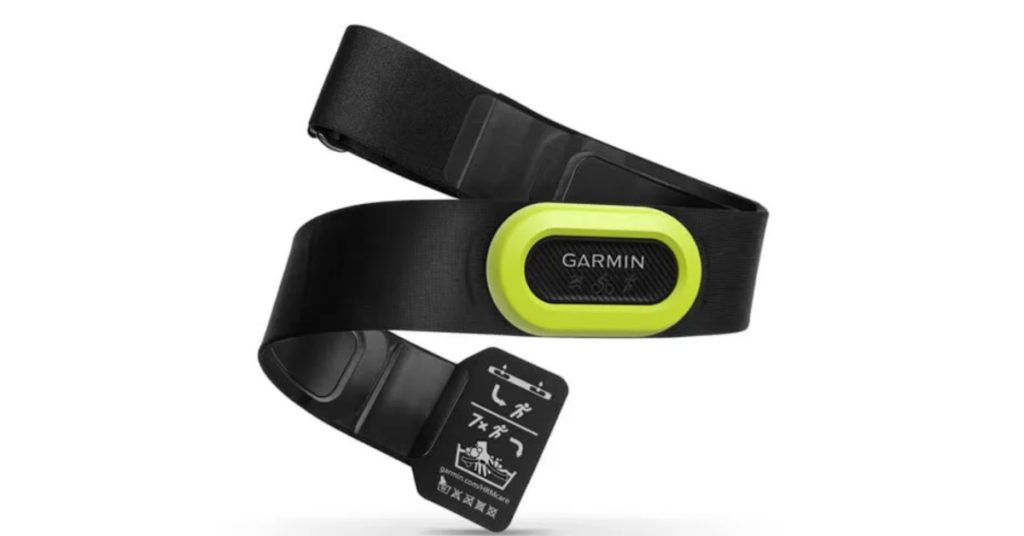
As a heart rate monitor (HRM), Garmin HRM Pro is on the pricier side but is considered a great all-round tracker. It provided running dynamics, such as vertical oscillation, ground contact time, stride length and vertical ratio.
The strap has internal storage, so you can store up to 18 hours of your workout on it and sync later with the app. Just make sure it’s not too long after, as waiting too long might mean you lose the data.
It also gives you 365 hours of battery life, and is water resistant to up to 50m.
Garmin HRM-RUN
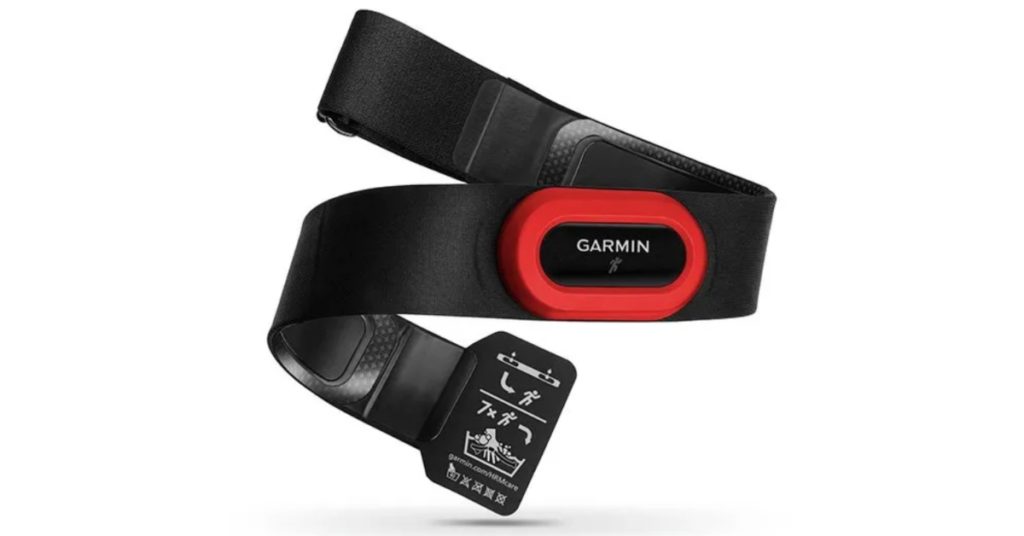
At 59g, Garmin HRM Run is one of the heavier chest straps, but the straps are quite comfortable and soft. It tracks cadence, vertical oscillation, ground contact time, as well as ground contact time balance, stride length, and vertical ratio.
Unlike HRM Pro, it does not come with built-in storage so you can’t record your work out without pairing it with a device.
However, it does give you 365 hours of battery life and water resistance of up to 50m.
Garmin HRM-DUAL
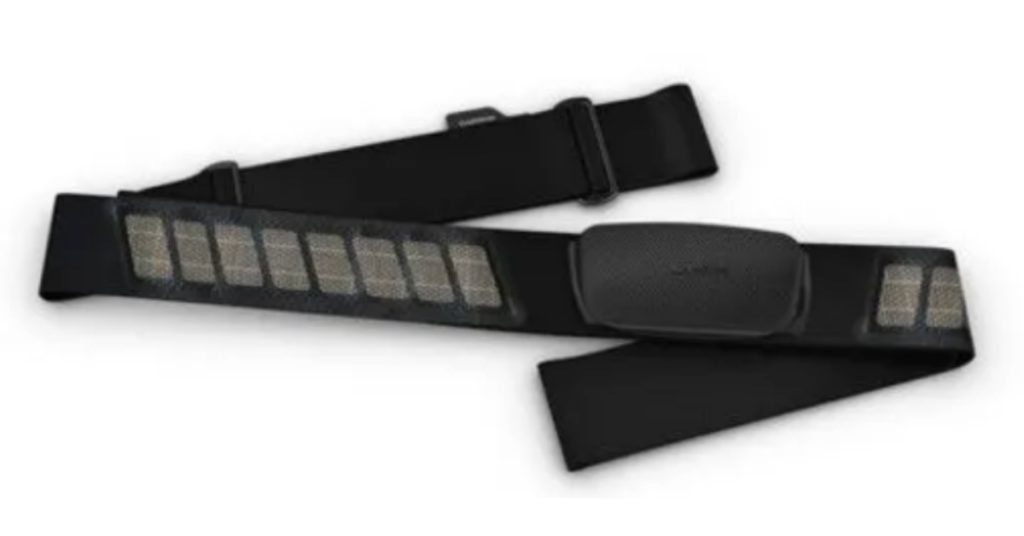
With over 1,000 hours of battery life, Garmin HRM-DUAL offers more than twice the battery life than the other models. It also offers unlimited ANT+ connections and two simultaneous bluetooth connections.
However, it does not have internal storage you need a connected device to record your workout. And, it doesn’t measure running form metrics either. It is water resistant to a depth of up to 10m.
Myzone MZ-3

The Myzone MZ-3 is different from the Garmin chest monitors as it connects to the Myzone platform for a social workout experience. It measures the intensity of your workouts and also allows social connections so you can compete with others on the app.
The design of the MZ-3 is not as refined as the Garmin chest monitors. In fact, the strap is quite stiff and can cause chafing. It is also heavier—60g—than the others. It also only offers 112 hours of battery life, but it’s the only chest strap that can be recharged. The others require a battery change.
It also offers simultaneous ANT+ and bluetooth connections and can store up to 16 hours of workout data. It is also water resistant to a depth of up to 10m.
MyZone vs Garmin: Which Is Right For You?
With this information, you can determine which HRM is best for you in the head-to-head between MyZone vs Garmin. While the MZ-3 is not great design-wise, it does offer other benefits, such as a social connection to keep you motivated. It is also a specialised heart rate monitor and does not measure anything else other than how much effort you put into your workout.
On the other hand, Garmin products measure many other metrics, which you might find useful. However, that comes with the added expense of replacing batteries. And, depending on the model, you might need to have a connected device with you while you exercise.
If you need more information on the best heart rate tracker for your exercise, get in touch with us.

Christian Scott is the founder and director of MindBodyFit, a website dedicated to providing the latest information on fitness, health, and mental well-being technology. With over six years of experience in the health and fitness industry, Christian is a passionate fitness enthusiast who combines his love for technology and wellness to help others achieve their best selves.