
Whether you are a fitness enthusiast or an endurance athlete, cardio watches can help optimise your fitness by offering a real-time snapshot of your heart health.
Besides helping you keep your ticker in check, they track a whole host of health metrics to ensure you are always in your best physical condition.
But with the market booming with tons of fitness trackers with bells and whistles, choosing the best cardio watch that can offer the best bang for the buck may seem overwhelming. To help you get budget-friendly fitness watches, we have rounded up a comprehensive cardio watch review.
What is a Cardio Watch?
A cardio watch is a sensor-based fitness tracking device specialising in monitoring the cardiovascular system (The heart, blood vessels, and blood), specifically, your heart muscle (myocardium) functionality and heart rate.
Your heart rate is the number of times your heart muscle contracts over a minute to pump oxygen-rich blood to the entire body.
Besides keeping a close eye on your cardiovascular system, a cardio watch gauges your essential body functions. It tracks your sleep duration, steps taken, SpO2 level or how optimally your pulmonary system functions, and monitors how fast your body can recover from an exhaustive bout of workout, workout efficiency based on your THR zone, and more. Plus, it can store the analysed data for later use by integrating with the company-specific mobile app.
Some top-end cardio watches are GPS-enabled that continually ping your locations and display your covered distance over a distinct period (usually 24 hours).
How Does a Cardio Watch Work?
A cardio watch can function based on two types of technologies:
- Electrocardiography (ECG) and
- Photoplethysmography (PPG)
Though the HR value tracked using ECG technology is more precise than PPG values, most mainstream wrist-based cardio watches don’t operate based on it.
The OHRM watches operate based on PPG technology – they house optical sensors with light emitters (LEDs) that radiate green light of various wavelengths onto your wrist skin. These emitted lights illuminate your arteries. Due to their varying wavelength, they interact differently with the layers of skin and tissue and reflect from the blood flowing underneath the wrist skin.
The photodetector senses and gauges the variation in the RBC concentration as the blood-flow dynamics alter with continuous contraction and expansion of blood vessels.
The intensity variation data of the reflected light accumulated by the photodetector and the motion data collected by the built-in accelerometer get fed into an advanced software algorithm. It translates the data into motion-tolerant pulse rate and essential body stats shown on your watch display and mobile app interface – VO2 reading, R-R interval, blood metabolite concentrations, SpO2, blood pressure, etc.
Your pulse rate value is proximal to your heart rate reading.
High-quality wearables also sync with third-party smartwatches or sports apps, so you can, more comfortably, monitor your body stats and ensure effortless health tracking.
The high-end algorithms in the latest cardio watches help track heart rate more precisely and send alerts of abnormal HR (atrial fibrillation). However, how accurately these algorithms in wrist-based wearables can operate while monitoring body stats and HR value is still under research. It’s because the gap between the wrist skin and sensor and difference in skin pigmentation can impact the light intensity variation data captured by the optical sensors.
The best news is that modern cardio watches, incorporating advanced battery technology, can house more sensors for better exactness.
The Importance of Using Cardio Watches
First off, if you feel anything wrong with your heart rate, make sure you consult a cardiologist. However, putting on a wearable cardio watch and tracking the reading can help triple your aerobic training effectiveness!
- By scanning your pulse pace, you can comprehend whether you’re pushing your body too hard or can push it a little harder during sessions of vigorous-intensity workouts and convalescing faster enough afterward.
- Longer-term, daily tracking of your heart-rate patterns can tell you what is driving spikes in your pulse, providing better insights into your cardiovascular system. For instance, studies say that if your (RHR) resting/standard heart rate is constantly above 90+ bpm, you may be suffering from tachycardia, indicating an underlying cardiovascular disease.
- If you run on trails for hours or hit the gym daily, wearing a cardio watch can help follow up on your current heart rate zone, how long you can sustain it, and how you can fix your THR/target heart rate zone and reach it steadily, safely and at a rhythmic pace.
- Plus, getting real-time data on your nutrient and water intake, SpO2, VO2 reading, and alerts of abnormal HR ensures optimal calorie expenditure or consumption, and you don’t overexert yourself while exercising.

Cardio Watch Review
Let’s unpack our comprehensive cardio watch review:
Fitbit Versa 3

Fusing advanced multipath sensor technology—PurePulse 2.0 for 24/7 non-stop HR monitoring with built-in GPS and top-notch navigation functionality, the Fitbit Versa 3 is the knockoff of almost all top-tier cardio watches with hefty price tags.
Though the new side button layout with Versa 3 seems a bit cumbersome, the sleek design, luminous, bigger AMOLED display with a long-lasting battery that takes less time to juice up, the stress management score, THR zone functionality, SpO2 measurement, and supported 20 workout mode make it one of the best cardio watches in its price bracket.
Pros
- Give your wrist a big buzz as you crush your THR zone with Fitbit’s Active Zone Minutes, and make every second count while exercising.
- Get notified immediately of irregular heartbeat and AFib – whether you are dozing off, working out, or relaxing.
- Optimise your training routine or nail your recovery process with Fitbit’s Daily Readiness Score
- Get your historical records and trends at your fingertips right from your iOS or Android device – thanks to Fitbit’s interactive mobile application
- Go phoneless with the Versa 3 GPS-enabled cardio watch while hiking, skiing, or trampolining and still get real-time insight into your covered distance and speed. Additionally, you can take a sneak peek of your workout route with Fitbit’s workout intensity map in the Versa 3 companion app interface.
Cons
- A handful of essential features are locked behind the Premium paywall
- Watchface-bound blood oxygen saturation tracking: Versa 3 measures SpO2 only when you’re sleeping!
Garmin Vivosmart 4

Accent your fashion while levelling up your health state with Garmin Vivosmart 4 – a slimline daily wearable watch packed with marquee fitness functionalities that can help optimise your health and make it less prone to burnout and stress.
If you have cardiovascular or lung issues, this dapper tracker, by coupling with its avant-garde on-wrist Ox² sensor, stress and REM (Rapid eye movement) sleep cycle tracking, breathing timer, and VO2 max scoring technology, can be your go-to choice.
Pros
- Vivosmart 4 GPS watch comes with Garmin Elevate™ sensor technology for constant wrist-based HR monitoring and abnormal HR alerts
- Includes built-in accelerometer, barometric altimeter and monitors your hydration level (Garmin Connect™) and women’s health (Garmin Connect™)
- It has a luminous, easily readable OLED watch interface with an auto-adjust mood.
- Combining HRV (Heart Rate Variability) with sleep, workout, and stress data, Vivosmarts 4’s Body Battery energy tracking technology tells you whether you’re fit for a massive workout session or not.
Cons
- No dedicated cycling profile
- No alerts service for taking periodic stress tests
- A bit expensive
Omron HeartGuide
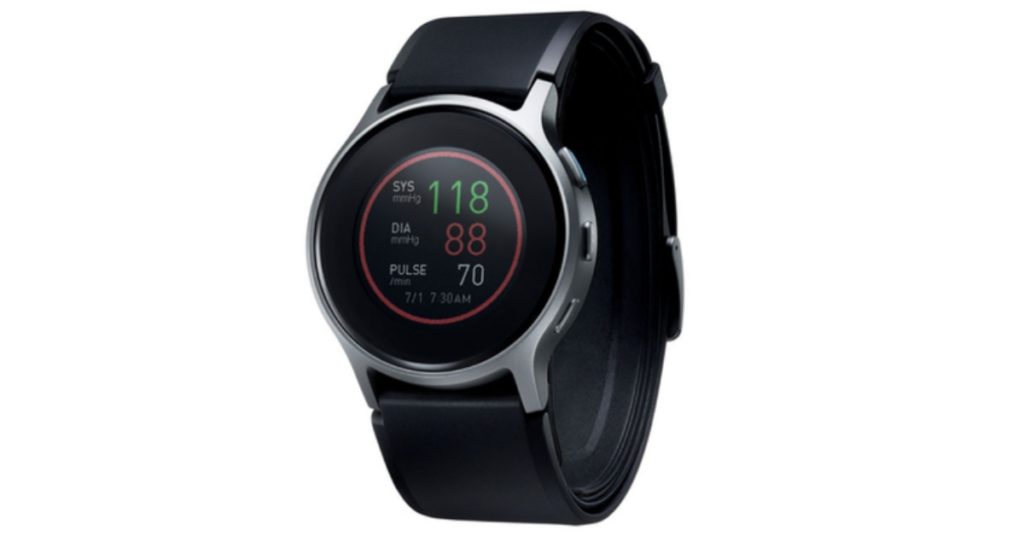
Packing all essential health-tracking features, Omron HeartGuide really lives up to its name – devised to match your lifestyle, HeartGuide is the medically-approved, high-end, wearable blood pressure tracker that combines with Omron HeartAdvisor app for accurate HR monitoring.
Omron brings innovative technologies on your wrist – now keep a close eye on your cardiovascular health via interactive colour-coded charts and with ease for a stronger heart!
Pros
- FDA approved premiere wrist-based blood pressure monitoring device
- Logs your steps taken, sleep cycles, calories burned, and distance covered. Plus, you can get better insights into your health with OMRON Connect.
- It features a Lithium-ion polymer rechargeable battery with an AC adapter that lasts up to 500 cycles.
- Transflective memory-in-pixel LCD
Cons
- A bit bulky
- A basic watch that shows time – it’s excellent for those who really need a portable BP tracker
Cardio Watch Review: Final Thoughts
And that concludes our cardio watch review! To summarise, they all do certain things well, and each have different short comings. Ultimately, it comes down to finding the right watch that suits your needs, as well as your budget.

Christian Scott is the founder and director of MindBodyFit, a website dedicated to providing the latest information on fitness, health, and mental well-being technology. With over six years of experience in the health and fitness industry, Christian is a passionate fitness enthusiast who combines his love for technology and wellness to help others achieve their best selves.